

From Drunkenness to Sobriety: How Daily Prayer Supports Recovery
If you're reading this, you've probably made promises to yourself at 3 a.m. that didn't survive until noon. Maybe you've poured bottles down the sink, deleted the liquor store's number, white-knuckled it for a week, and then caved. You love Jesus. You also feel like a fraud every time you sing about grace on Sunday and wake up Monday ashamed.
Here's the honest question underneath all of it: can a prayer for sobriety actually do anything, or is it just spiritual-sounding advice for a physical problem? Scripture doesn't dodge that question. It answers it. But not the way most of us expect.
In this guide:
- Why Drunkenness Is a Spiritual Battle, Not Just a Bad Habit
- What Galatians 5:21-23 Actually Says About Sobriety
- Why Willpower Alone Keeps Failing You
- How Daily Prayer Builds the Self-Control You Can't Manufacture
- Praying Through a Craving: A Practical Pattern
- What to Do When You Relapse
- Prayer Plus: Why You Still Need a Recovery Community
- How to Support Someone You Love Who Is Struggling With Alcohol
- Frequently Asked Questions
- Start Tomorrow Morning With Prayer, Not Your Phone
Why Drunkenness Is a Spiritual Battle, Not Just a Bad Habit
Paul doesn't tiptoe. In Galatians 5:19-21 he writes:
The acts of the flesh are obvious: sexual immorality, impurity and debauchery; idolatry and witchcraft; hatred, discord, jealousy, fits of rage, selfish ambition, dissensions, factions and envy; drunkenness, orgies, and the like. I warn you, as I did before, that those who live like this will not inherit the kingdom of God.
Read that list slowly. Drunkenness sits in the middle of it, not in a footnote, not in a "minor issues" category. It's listed right alongside fits of rage and envy, which means Paul sees it the same way he sees the sins we're quick to point at in other people.
That's heavy. But notice what Paul does next. Two verses later he writes, "But the fruit of the Spirit is love, joy, peace, forbearance, kindness, goodness, faithfulness, gentleness and self-control." The same passage that names the problem names the solution. That's not a coincidence. It's the whole architecture of the Christian life.
So no, this article isn't here to condemn you. If you're a believer struggling with alcohol, you are not the first, and you are not outside the reach of grace. We're here because Scripture treats your struggle as real, physical, and spiritual all at once. And it offers something more durable than shame.
What Galatians 5:21-23 Actually Says About Sobriety
Two words in this passage carry the whole argument: flesh and fruit.
Drunkenness is an act of the flesh. Self-control is fruit of the Spirit. Those aren't just two different categories. They're two different processes. Acts are things you do. Fruit is something that grows.
That distinction matters more than almost anything else you'll read about recovery.
The misreading that trips people up
Some read verse 21, "those who live like this will not inherit the kingdom of God," and hear, "If you ever got drunk, you're not really saved." That's not what Paul is saying. He's describing the direction of a life, not cataloging every stumble. A person whose life is characterized by drunkenness is walking after the flesh. A person who falls, repents, and gets back up is walking after the Spirit. Imperfectly, but genuinely.
The New Testament is full of believers who failed badly and were still called saints. Peter denied Christ three times. The difference wasn't that they never fell. It was which way they were facing when they got up.
Fruit grows; it isn't manufactured
You can't grit your teeth and produce fruit. No apple tree strains to make apples. It abides in the soil, draws from the root, and fruit shows up in season. Jesus said the same thing in John 15:5: "If you remain in me and I in you, you will bear much fruit; apart from me you can do nothing."
That reframes sobriety entirely. It's not "try harder." It's "walk in the Spirit" (Galatians 5:25) and let self-control grow where it actually comes from.
Why Willpower Alone Keeps Failing You
Here's the objection we hear most: I've tried. I've prayed. I still drank.
We believe you. And we'd gently suggest the problem might not be your effort. It might be the source you're drawing from.
White-knuckling sobriety is flesh fighting flesh. It's your willpower against your appetite, and your appetite has been training longer. It knows your triggers, your weak hours, your excuses. It's patient. It waits for the fight you're too tired to win.
Spirit-empowered self-control looks different. It's not the absence of craving. It's the presence of something stronger than the craving. It's the difference between resisting a pull and being anchored somewhere the pull can't reach.
How Daily Prayer Builds the Self-Control You Can't Manufacture
A man who prays five honest minutes every morning for a year will outlast a man who prays two passionate hours once a month. The first is training a will. The second is having a moment.

Think of it like physical training. Nobody gets strong by lifting once. You get strong by showing up when you don't feel like it, on the days it's boring, on the days your muscles are sore. Prayer works the same muscle. The one that decides who's in charge when the flesh starts shouting.
Why the first twenty minutes matter
Most relapses don't happen at random. They happen at the end of a day that started wrong. Rushed, distracted, already behind, already reaching for the phone before your feet hit the floor.
That's the specific thing we built Light Keeper around. The app locks your phone until you've completed your daily prayer. Not a reminder you can swipe away. An actual block. You pray first, then the day opens up.
It sounds almost too simple. But the first twenty minutes of your day set the tone for the cravings that come at 5 p.m. If you start the day in the Spirit, you're not starting from zero when the flesh shows up later.
Three prayer prompts you can use tomorrow
You don't need eloquent words. You need honest ones.
- "Lord, I can't do this in my own strength, and I've proven it. Give me today what I don't have." This is the prayer of dependence.
- "Search me, God, and know my heart" (Psalm 139:23). Ask God to show you what's underneath the drinking. The loneliness, the anger, the fear. Alcohol is usually a symptom, not the disease.
- "Lead me not into temptation, but deliver me from evil" (Matthew 6:13). Pray it specifically. Name the hour, the place, the person. General prayers get general results.
If you want to go deeper on why daily, consistent prayer is the whole point, not occasional intensity, our piece on keeping the lamp burning walks through the parable behind the app.
Praying Through a Craving: A Practical Pattern
A craving speaks with authority it doesn't have. It says this will never lift, and it says it in your own voice. The truth is, most cravings peak and fade within fifteen to twenty minutes if you don't feed them.
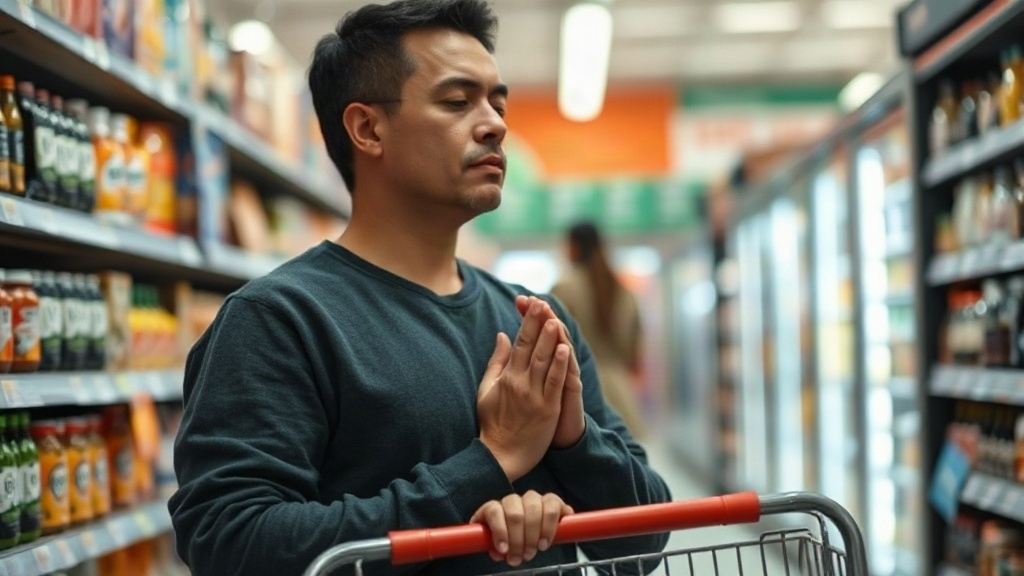
Here's a pattern you can run in the moment:
- Stop. Physically stop moving toward the thing. Don't drive past the store "just to see."
- Name it out loud to God. "Lord, I want a drink right now. I'm telling you the truth about it." There's something disarming about saying it plainly instead of managing it silently.
- Quote a verse. 1 Corinthians 10:13 is the one to memorize: "No temptation has overtaken you except what is common to mankind. And God is faithful; he will not let you be tempted beyond what you can bear. But when you are tempted, he will also provide a way out so that you can endure it." Say it out loud. Twice if you need to.
- Call your person. Not text. Call. The one person who knows you're in recovery and won't let you isolate.
- Wait fifteen minutes. Set a timer if you have to.
Prayer in the moment isn't a magic eraser. It's a redirect. It moves your attention off the flesh and onto the Spirit. That's where the power actually is.
What to Do When You Relapse
This is the fear underneath everything else, so let's say it plainly: relapse is not the end of your salvation, and it is not proof that prayer doesn't work.
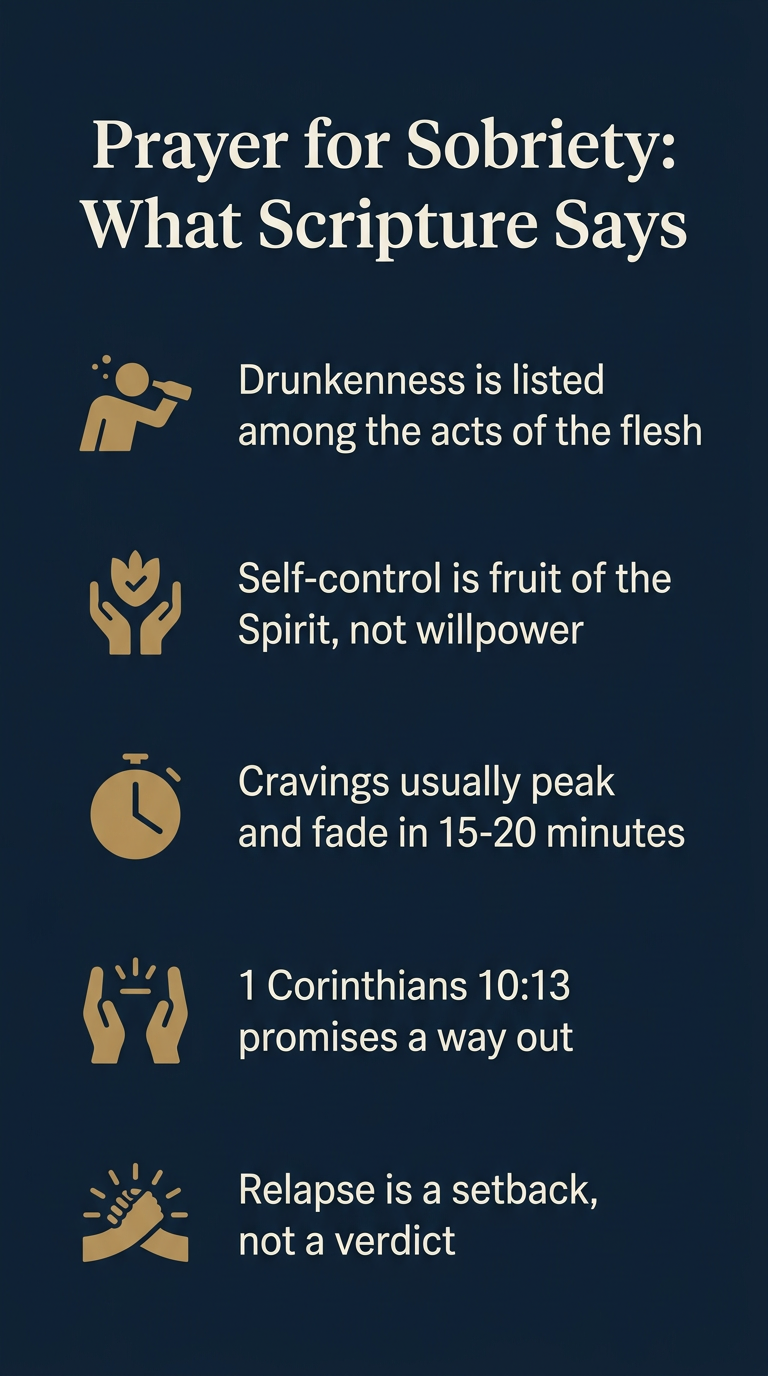
1 John 1:9 says, "If we confess our sins, he is faithful and just and will forgive us our sins and purify us from all unrighteousness." That promise doesn't have an asterisk for alcohol.
What you do next matters more than what you did.
Get back to the habit the next morning. Not next Sunday. Not after you've cleaned yourself up enough to deserve it. Tomorrow. Open the app, pray, start again. The streak matters less than the return.
Watch out for two extremes:
- Despair. "I must not really be saved." That's a lie. Believers fall. Believers get up.
- Presumption. "Grace covers it, so it doesn't matter." Paul answers that one in Romans 6:1-2: "Shall we sin all the more so that grace may increase? By no means!"
The right response is repentance. Turning around. And getting back on the path. Not groveling, not shrugging. Turning.
Prayer Plus: Why You Still Need a Recovery Community
Scripture never calls you to fight alone. Galatians 6:2 says, "Carry each other's burdens, and in this way you will fulfill the law of Christ." That's not a suggestion.
If you're serious about sobriety, prayer is the foundation, but it's not the whole house. You also need a local church where you're known by name, a men's or women's group that asks hard questions, and a biblical counselor if the roots run deeper than you can reach alone. If you're physically dependent on alcohol, a medically supervised program is wisdom, not a lack of faith.
We built Light Keeper to help you pray every day. We did not build it to replace your pastor, your group, or your doctor. Any app that claims to is lying to you.
If you want to know who's behind this article and where we stand theologically, you can read more about us.
How to Support Someone You Love Who Is Struggling With Alcohol
Maybe you're not the one drinking. Maybe you're the spouse who found the bottle, or the parent who's been praying for years, or the friend who doesn't know what to say anymore.
A few things that actually help:
- Pray for them specifically and daily. Name the hour, the trigger, the wound underneath. Not vague "bless them" prayers.
- Don't enable, and don't preach. They already know. What they need is a person who's still there.
- Get your own support. Loving an addict will empty you fast. You can't pour from an empty cup.
And if you're the one struggling, if you landed here looking for yourself, know that someone praying for you right now is not nothing. It's the most powerful thing they can do.
Frequently Asked Questions
Is drinking alcohol a sin?
Scripture condemns drunkenness, not drinking itself. Ephesians 5:18 says "Do not get drunk on wine," and Galatians 5:21 lists drunkenness among the acts of the flesh. But if alcohol controls you, that's a different matter. Romans 14:21 puts it well: it's better not to drink if it causes a brother to stumble, including yourself.
Can prayer cure alcoholism?
Prayer is essential, but it's not a cure in the medical sense. If you're physically dependent, you may need supervised detox and ongoing treatment. What prayer does is grow the self-control that keeps you steady through recovery. It addresses the spiritual root that clinical treatment alone can't reach.
What Bible verses help with addiction?
1 Corinthians 10:13 promises God provides a way out of every temptation. Galatians 5:22-23 names self-control as fruit of the Spirit. Psalm 34:17-18 says the Lord hears and delivers. James 5:16 calls us to confess and pray for one another. Memorize two or three. You won't have time to look them up mid-craving.
How long does it take to break a drinking habit with prayer?
There's no formula. Some experience dramatic deliverance; most grow into sobriety over months of daily faithfulness. Think direction, not speed. If you're praying daily and the trend line is toward less drinking and more dependence on God, that's the Spirit at work. Keep going.
Does God forgive a relapse?
Yes. 1 John 1:9 makes no exceptions for alcohol. Confess it, receive the forgiveness, and get back to the daily habit the next morning. What God asks is not perfection. It's a heart that keeps turning back to Him. Relapse is a setback, not a verdict.
Start Tomorrow Morning With Prayer, Not Your Phone
Here's the decision this article is really asking you to make. Not "try harder." Not "be more disciplined." Just this: tomorrow morning, before the phone unlocks, before the coffee, before the day gets loud, pray.
That's it. One morning. Then one more.
The reason we built Light Keeper is that most of us can't do that with a phone in our hand. The pull is too strong, the scroll too easy, the notifications too loud. So the app does something physical about it. It locks your phone until you've completed your daily prayer. No swipe-away reminder. No "I'll do it later."
You pray first. Then the day opens.
It won't fix everything. It won't replace your church, your group, or your counselor. But it will put the first minutes of every day in the hands of the Spirit instead of the flesh. Over months, that changes what you're capable of when the craving comes.
If you want to know more about the brothers who built this thing and why, read the story behind the app. And if you want to keep growing in this direction, our blog has more on prayer and spiritual discipline.
But first, download Light Keeper, and make tomorrow morning different.