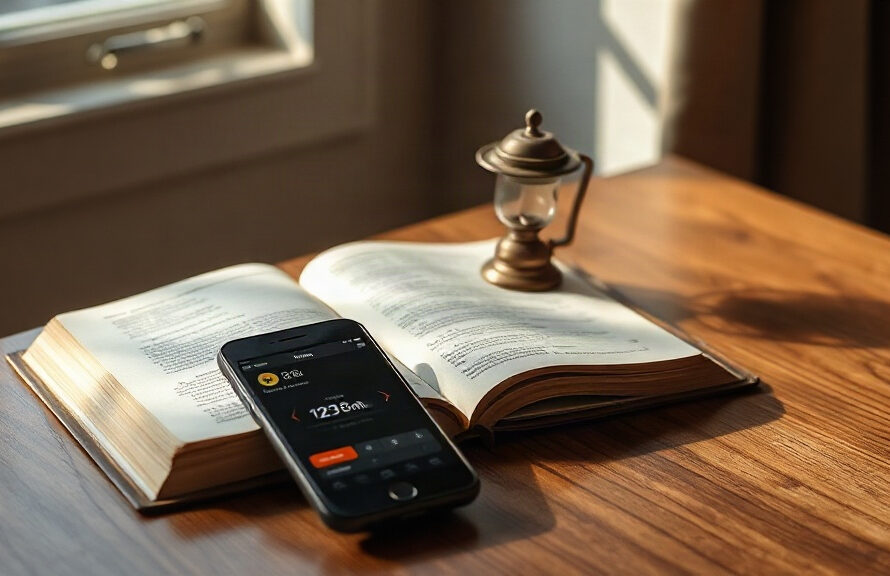
Why Your Phone Is Your Biggest Spiritual Enemy (and What to Do About It)
You wake up, reach for your phone, and twenty minutes vanish before you've even said good morning to God. Sound familiar? You're not alone—and it's not just a bad habit. For countless Christians, the phone has quietly become the single greatest obstacle to a consistent prayer life. Studies suggest the average person checks their phone nearly 100 times a day, and if we're honest, many of those checks happen in moments we once reserved for God. This article isn't about guilt—it's about freedom. We'll look at what the Bible says about distraction, how your phone undermines your spiritual life in ways you might not notice, and practical, faith-centered steps to take back your attention.
In this guide:
- The Spiritual Danger of the Phone
- What the Bible Says About Distraction and Focus
- How Phone Addiction Quietly Erodes Your Prayer Life
- Practical Steps to Reclaim Your Attention for Prayer
- Using Technology for Good: Apps That Help You Pray
- Staying Consistent When You Fail
- Frequently Asked Questions
The Spiritual Danger of the Phone
Let's paint the scene. You sit down with your coffee, Bible open, ready to pray. Then the phone buzzes. Just a quick glance, you tell yourself. Forty-five minutes later, you're watching someone's vacation highlights and reading comments on a political post you never meant to engage with. The Bible is still open, but your heart has drifted somewhere else entirely.
We've all been there. But here's the uncomfortable truth: this isn't just a discipline problem. It's a spiritual battle, and the phone is one of the enemy's most effective tools.
The spiritual danger isn't that phones are evil objects. A phone is a tool, like a hammer or a stove. But unlike a hammer, the modern smartphone was designed by some of the brightest minds on the planet to capture and hold your attention for as long as possible. Every notification, every infinite scroll, every autoplay video is engineered to keep you engaged. And what suffers? Your ability to be still. Your capacity for silence. Your time with God.
Scripture calls us to a different rhythm. Psalm 46:10 says, "Be still, and know that I am God." That stillness is nearly impossible when your mind is constantly buzzing with the noise of the world. Jesus himself said in Matthew 6:33, "But seek first his kingdom and his righteousness, and all these things will be given to you as well." Seeking first means giving God your first and best attention—not the leftovers after you've scrolled through everything else.
The phone doesn't just steal your time; it steals your presence. When you're constantly connected to everyone and everything, you're rarely fully present with anyone—including God.
What the Bible Says About Distraction and Focus
The Bible has a lot to say about distraction, and none of it is flattering. Over and over, we see God's people pulled away from what matters by the noise of the world.
Consider Mary and Martha in Luke 10:38-42. Martha is busy, distracted by "all the preparations that had to be made." She's doing good things—serving, hosting, working. But Jesus gently rebukes her: "Martha, Martha, you are worried and upset about many things, but few things are needed—or indeed only one. Mary has chosen what is better, and it will not be taken away from her."
Mary sat at Jesus' feet. Martha was distracted by good things that weren't the best thing. Your phone often does the same thing—it fills your life with good things (news, connection, entertainment) that crowd out the best thing (communion with God).
Then there's the parable of the sower in Matthew 13. Jesus describes seed that falls among thorns, and He explains what the thorns represent: "the worries of this life and the deceitfulness of wealth" (Matthew 13:22). The seed grows, but the thorns choke it out. Sound familiar? Your faith is growing, but the constant notifications, the endless stream of information, the comparison and envy that come from scrolling—these are thorns. They don't kill your faith outright; they just choke it so it can't bear fruit.
Jesus also modeled the opposite. Mark 1:35 tells us, "Very early in the morning, while it was still dark, Jesus got up, left the house and went off to a solitary place, where he prayed." If the Son of God needed to withdraw from noise and distraction to pray, how much more do we?
How Phone Addiction Quietly Erodes Your Prayer Life
Phone addiction doesn't usually announce itself. It's not like you wake up one day and decide to stop praying. Instead, it erodes your spiritual life in small, almost invisible ways. Here's what's actually happening:
Your attention span is shrinking. Research on attention spans has been debated, but the experience is undeniable: when you train your brain to consume bite-sized content all day, sitting in prayer for even five minutes feels like an eternity. Your mind jumps from thought to thought, and prayer becomes frustrating instead of life-giving.
You're always mentally occupied. Even when you're not actively scrolling, your mind is processing what you've seen. That argument in the comments section. That friend's engagement post. That breaking news alert. Your brain never gets quiet, and silence becomes uncomfortable. But prayer requires silence. If you can't be still, you can't truly pray.
Comparison steals your contentment. Scrolling through curated versions of everyone else's life breeds envy and dissatisfaction. You start comparing your prayer life, your family, your walk with God to what you see online. That comparison chokes gratitude and makes you feel like you're falling behind—which, ironically, makes you want to escape into your phone even more.
You procrastinate on prayer. The phone is the ultimate avoidance tool. Feeling convicted about prayer? Just open Instagram and the conviction fades into the background. The enemy loves this. He doesn't need to make you a bad person; he just needs to keep you distracted from becoming a prayerful one.
Your prayer time becomes a checklist. When you do pray, it's rushed, distracted, and mechanical. You're checking the box so you can get back to your phone. That's not communion; that's compliance. And it's not what God wants from you.
None of this happens overnight. It's a slow drift, and that's what makes it so dangerous. You don't notice the erosion until prayer feels almost impossible.
Practical Steps to Reclaim Your Attention for Prayer
The good news? You can fight back. Reclaiming your attention for prayer doesn't require a dramatic overnight overhaul—it requires small, consistent, intentional changes. Here are practical steps that actually work:
1. Set a specific prayer time and protect it.
"Pray more" is too vague. "Pray at 6:30 AM before I pick up my phone" is specific. Put it on your calendar. Treat it like a non-negotiable appointment with the King of Kings. If mornings don't work for you, pick another time—but pick one and stick to it. Daniel prayed three times a day, every day, no matter what was happening around him (Daniel 6:10). That's the model.
2. Create phone-free zones.
Designate physical spaces where your phone doesn't go. The bedroom is a great start—many Christians find that charging their phone in the kitchen instead of on the nightstand transforms their mornings. The dinner table is another. These zones become sanctuaries where distraction simply can't follow you.
3. Use an app blocker or phone lockdown app.
This is where technology can actually serve your faith. There are apps designed to block distracting apps during certain hours. Even more powerful: apps like Light Keeper that literally lock your phone until you've completed your daily prayer. You can't scroll until you've prayed. It's a practical, physical barrier that honors your spiritual intention.
4. Practice digital fasting.
Choose one day a week (or one evening) to go phone-free. No social media, no news, no games. Use that time for extended prayer, Scripture reading, and real-world connection. Digital fasting isn't about legalism—it's about reminding yourself that you're not enslaved to your device. You can read more about how to structure this below in the FAQ.
5. Replace scrolling with prayer prompts.
When you feel the urge to pick up your phone and scroll, turn that impulse into a prayer trigger instead. See a friend's post? Pray for them. See a news story? Pray for those affected. This transforms your phone from a distraction into a prayer prompt.
6. Start absurdly small.
If you're currently praying zero minutes a day, don't aim for an hour. Aim for two minutes. Set a timer if you need to. The goal is to build the habit, not to perform. A five-minute prayer you actually keep is worth more than an hour you abandon by Thursday.
Using Technology for Good: Apps That Help You Pray
Let's be clear: technology isn't the enemy. The enemy is how we use it. And in fact, there are Christian apps designed to help you pray more consistently, not less.
Light Keeper takes a unique approach. Instead of just offering prayer content, it addresses the root problem: your phone is distracting you from prayer, so Light Keeper locks your phone until you complete your daily prayer. You literally cannot access your apps until you've spent time with God. It's based on the parable of the ten virgins—keeping your lamp burning by making prayer the first thing you do, not the last thing you get around to. The app includes themed prayer guides, streak tracking to build consistency, and adaptive prayer plans that work with your schedule.
Other apps serve different purposes. Hallow offers guided Catholic prayers and meditations, with a polished production and celebrity narrators. YouVersion (the Bible App) provides Scripture reading plans and devotionals used by millions worldwide. Pray.com focuses on audio prayers and community. These are all good tools.
But here's the difference: most prayer apps assume you'll open them when you're ready to pray. Light Keeper assumes you won't—because it knows your phone is your biggest spiritual enemy. So it removes the choice. You pray, or you don't use your phone.
If you're curious about the heart behind Light Keeper, you can read about the idea behind the app and the story of the two brothers who built it. It's a reminder that real people, struggling with the same distractions you are, decided to do something about it.
Staying Consistent When You Fail
Here's the part nobody likes to talk about: you're going to fail. You'll have a week where prayer feels amazing, and then you'll hit a day where you sleep through your alarm, grab your phone, and scroll for an hour before you remember you were supposed to pray. And then you'll feel guilty. And then the guilt will make you avoid prayer even more. It's a cycle.
Break it. Here's how:
Remember that God's grace is bigger than your inconsistency. Lamentations 3:22-23 says, "Because of the Lord's great love we are not consumed, for his compassions never fail. They are new every morning." Every morning. That means today is a fresh start, no matter how badly yesterday went.
Don't let a missed day become a missed week. One skipped prayer is a stumble, not a fall. The enemy wants you to believe that because you missed a day, you've ruined everything. That's a lie. Get back up, pray today, and move on.
Find an accountability partner. Tell a trusted friend or family member about your goal to pray consistently. Ask them to check in with you. James 5:16 says, "Confess your sins to each other and pray for each other so that you may be healed." Accountability isn't just for addiction recovery—it's for spiritual growth.
Track your streaks, but don't worship them. Streak tracking can be motivating. Seeing a 30-day prayer streak is encouraging. But when you break the streak, don't let it become an idol. The goal isn't a number; the goal is communion with God. A broken streak is just data, not a verdict.
Remember that consistency is built through grace, not perfection. You're not earning God's love by praying every day. You're receiving His love by spending time with Him. The discipline matters, but it flows from relationship, not obligation.
The wise virgins in Matthew 25 kept their lamps burning—but they also had to refill their oil. They planned ahead. They made provision for the long haul. Your prayer life needs the same planning. And when you run out of oil, you don't give up—you go get more.
Frequently Asked Questions
Is it a sin to be on my phone too much?
Not in itself. The Bible doesn't mention smartphones, obviously. But anything that consistently displaces God from His rightful place in your life becomes idolatry. If your phone habit is harming your relationship with God, your family, or your own well-being, it's a sin to ignore that conviction. The question isn't "Is scrolling sinful?" but "Is scrolling keeping me from God?"
How do I do a digital fast?
Start small. Pick one evening or one day a week to go completely phone-free. Turn off your phone or put it in another room. Tell people you're fasting so they don't worry. Use the time for extended prayer, Scripture reading, nature walks, and face-to-face conversations. If a full day feels too hard, start with a few hours. The point isn't the length—it's the intentionality.
What if I can't pray in the morning?
Then pray at a different time! The biblical principle is "first fruits"—giving God your best, not necessarily your earliest. If you're not a morning person, pray during your lunch break, right after work, or before bed. The key is consistency, not timing. Find a time you can actually maintain and protect it.
How long should I pray each day?
There's no biblical mandate for a specific length. Quality matters more than quantity. Five focused, sincere minutes are better than thirty distracted ones. Start with a realistic goal—even two minutes—and gradually increase as the habit solidifies.
What if I don't know what to pray?
Use Scripture as your prayer. Pray the Psalms out loud. Use the Lord's Prayer as a structure. Try a prayer guide or app with themed prayers. And remember: the Holy Spirit intercedes for us when we don't know what to say (Romans 8:26). Simply sitting in God's presence with an open heart is a prayer in itself.
Start tonight. Put your phone in the kitchen before bed. Set your alarm for tomorrow morning. And when you wake up, pray before you scroll—even if it's just two minutes. The battle for your attention is real, but it's winnable. One prayer at a time.
If you're ready to put prayer first—literally—learn more about Light Keeper and how it can help you keep the lamp burning. And if you want more encouragement like this, visit our blog for regular reflections on faith, focus, and the daily walk.